

Bitter Herbs: A Beginner’s Guide to an Old Digestive Tradition
Bitter herbs are plants with a sharp, bitter taste that people have taken around meals for centuries. Many cultures have their own version. Some sip a small glass of bitters after dinner. Others chew bitter greens or brew a bitter tea. This guide explains what these herbs are, how people use them, and what to keep in mind before you try them.
What are bitter herbs?
The name says it all. These are plants whose roots, leaves, peels, or flowers taste bitter. Bitterness is one of the basic tastes, along with sweet, sour, salty, and savory.
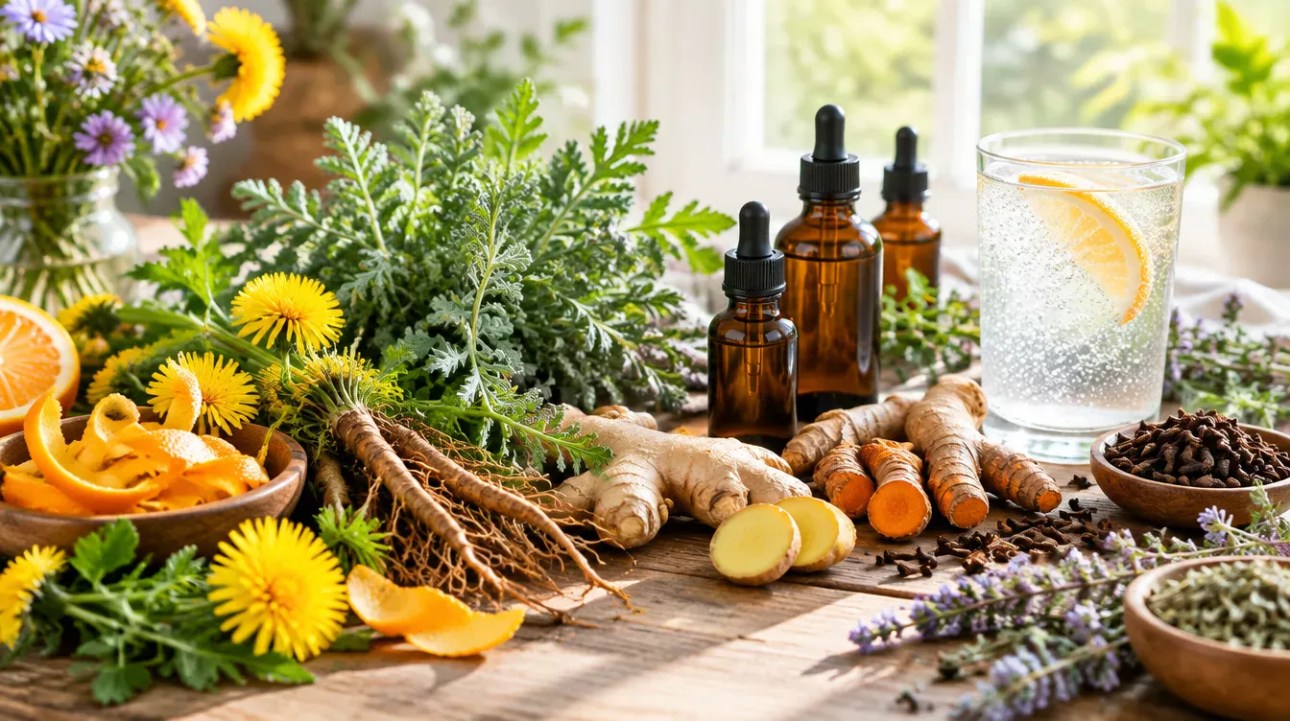
Over time, herbalists grouped many of these plants into a family of their own. Some of the best known include:
- Gentian root, a classic base for many traditional bitters.
- Dandelion root and leaf, which grow almost everywhere.
- Wormwood, a strong, aromatic herb with a long history in Europe.
- Orange peel, which adds a bitter and citrus note.
- Artichoke leaf, common in Mediterranean traditions.
- Clove, ginger, and turmeric, which are warming spices often blended with bitter herbs.
How bitter herbs fit into mealtime traditions
Bitter herbs have long been linked with digestion. In many traditions, people take them shortly before or after a meal. For example, European digestif drinks often rely on gentian and other bitter roots. Likewise, many Caribbean and Latin American homes have their own bitter tonics passed down through families.
The idea behind the habit is simple. The bitter taste is strong and hard to ignore. So taking a small amount became a way to mark the start or end of a meal.
It is worth being clear about the evidence, though. Researchers have found bitter taste receptors in other parts of the body, including the gut. However, scientists are still studying what these receptors do. In short, the tradition is old, but modern research on bitter herbs is still limited.
Common ways people take them
You can find bitter herbs in several forms. Each one has its own pros and cons.
- Liquid bitters. These are tinctures or tonics taken by the drop or in a small serving. Many people add them to water.
- Teas. Dried herbs steeped in hot water make a simple, gentle option.
- Capsules or softgels. These skip the taste, which some people prefer.
- Food. Bitter greens like dandelion, arugula, and radicchio bring the same flavor to a meal.
Whatever the form, start with a small amount. Then follow the label directions and pay attention to how you feel.
Safety points to know first
Natural does not always mean safe for everyone. Some bitter herbs are strong, and a few have clear cautions.
- Wormwood contains a compound called thujone. For this reason, it is usually meant for short-term use and is not suggested during pregnancy.
- Senna, which appears in some bitter blends, is a stimulant laxative. Products with senna are generally meant for short-term use only.
- Herbs can interact with medicines. If you take prescription drugs, check with a pharmacist or doctor first.
- Pregnancy, nursing, and children call for extra care. In these cases, talk to a health professional before using any herbal product.
The National Center for Complementary and Integrative Health has a helpful guide on using dietary supplements wisely. It covers how to check labels, spot red flags, and talk to your doctor.
How to choose a quality product
Supplements are not reviewed by the FDA for safety or effectiveness before they are sold. Because of this, it pays to shop carefully.
First, look for a full ingredient list with clear amounts. Next, check for a real business address and a way to contact the company. Then, be wary of any product that claims to cure or treat a disease. Finally, choose brands that explain where their label details come from.
Where to explore bitter herbs
If you want to see how these herbs come together in modern formulas, ASPHODEL CO. offers traditional botanical blends built around bitter herbs such as wormwood and clove. The brand also runs a journal with a deeper look at what herbal bitters are and where they come from.
Disclosure: ASPHODEL CO. is a sister brand of Creative Geniusess.
For more wellness and health coverage, browse our Health section.
The bottom line
Bitter herbs carry one of the oldest food traditions in the world. People still take them as liquid bitters, teas, capsules, and greens. The research is still catching up, so keep your expectations realistic. Start small, read every label, and check with a health professional if you take medicine or have a health condition.
This article is for general education only and is not medical advice. These statements have not been evaluated by the Food and Drug Administration. Herbal products are not intended to diagnose, treat, cure, or prevent any disease.


